




Malaysia forecast to reach 29.7 GW of solar by 2035
GlobalData’s latest analysis says Malaysia is on course to surpass its 2040 renewable energy targets by 2031.
By Patrick Jowett 04 Jun 2026
alaysia is on track to reach 29.7 GW of solar capacity by 2035, according to figures shared by GlobalData.
The consultancy is expecting Malaysia’s solar capacity to rise from 5.8 GW at the end of last year to 7.3 GW at the end of this year, an increase of 1.5 GW.

Next year’s solar deployment is forecast to reach 1.9 GW, the analysis adds, before annual deployments increase to between 2.4 GW and 2.7 GW annually through to 2035.
This trajectory would see Malaysia surpass 10 GW of solar during 2028 and exceed 20 GW of solar during 2032, leaving the country just short of 30 GW by the end of 2035.
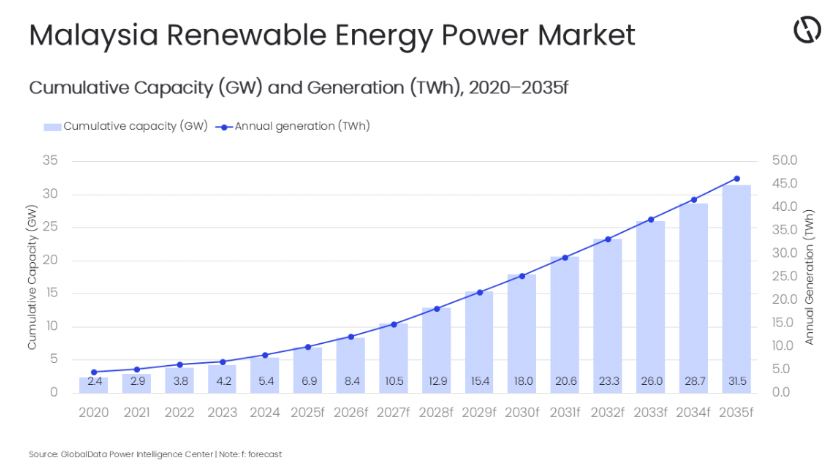
Solar energy accounts for most of Malaysia’s renewable capacity. GlobalData’s analysis forecasts the country’s total renewable fleet will increase from around 6.9 GW in 2025 to approximately 31.5 GW by the end of 2035.
This growth rate would see Malaysia exceed its National Energy Policy’s 2040 renewable energy capacity target of 18.43 GW during 2031, nine years in advance. GlobalData attributes the progress to Malaysia’s large-scale solar tenders, strong policy framework, accessible financing and rapidly-improving grid integration and storage capacity.
Sudeshna Sarmah, Power Analyst at GlobalData, commented that Malaysia’s energy investment portfolio increasingly tilted towards renewables from 2020 to 2025.
“Solar PV has seen robust and steady growth, with capital allocations rising approximately $2.1 billion by 2025. Investments in hydro and biopower remain modest while gradually increasing, they are still small relative to solar,” Sarmah said.
“Looking ahead to 2026 to 2030, solar is projected to dominate the renewable energy investment landscape. Gas will maintain a supporting role, with investment in balancing and peaking capacity hovering between $0.2–0.6 billion annually.”
Attaurrahman Ojindaram Saibasan, Power Analyst at GlobalData, told pv magazine that Malaysia could support its solar market further by extending tax breaks and green financing tools past 2026 so investors and developers feel more secure.
“Introducing feed-in tariffs especially for smaller, remote, or off-grid projects could really help bring solar to places where the grid isn’t strong,” he also suggested. “Switching up export rates to match when the grid needs energy most using time-of-use or dynamic pricing would reward people who shift their solar production to peak times.”
Saibasan added that supporting energy storage with subsidies or tax credits will be key, as well as faster approvals for grid connections and clearer roadmaps showing where the grid can handle more solar in order to reduce bottlenecks.
Saibasan also suggested that local manufacturing of solar panels and related components would boost supply chains and create jobs, while investing in research and development for floating solar, agrivoltaics and integrated roof systems could open new frontiers.
“Having stable, transparent regulations and good standards for equipment and installers would build trust, while focused programs for rural or underserved areas would help make the shift to solar more inclusive for everyone,” he told pv magazine.
Last month, the government of Malaysia announced a new rebate scheme for home solar installations offering a rebate of MYS 600 ($151.27)/kWac, up to a maximum MYS 3,000 per household for a 5 kWac system.